




Tips for Selecting Lighting To Complement Leather Furniture

When homeowners choose leather furniture, they usually focus on shape, color, and size first. Lighting tends to come later, yet it has a huge effect on how the piece looks every day. Before selecting lights, think about how the color temperature and fixture’s size will complement leather furniture.
Choose Warm, Soft Lights
Warm, soft light brings out the depth in leather without stripping away its character. It picks up natural highs and lows in the surface, so smooth leather shows a gentle glow while pebbled or distressed leather shows texture with definition. Harsh cool light pushes leather tones toward gray or yellow, and strong overhead glare wipes out the subtle detail that gives the piece its visual weight.
Match the Fixtures to the Finish
Not every leather surface responds to light the same way. Full-grain and top-grain leather show shade variations, natural markings, and a slight sheen. That’s why diffused light works the best. Incorporating a shaded table lamp or a frosted globe will soften the beam, so the surface shines without a hot spot.
Matte leather needs a little direction in the light to highlight its texture. Place a lamp so the beam skims across the arm or front rail instead of hitting the seat straight on. The angle will reveal the grain while shaping the furniture.
Glossy leather that has too much direct light results in a slick surface. In rooms with polished leather, skip exposed bulbs near eye level and choose lamps with shades or dimmers. The light will spread gently across the upholstery.
Avoid Light That Washes Out the Details
A single bright ceiling fixture rarely flatters leather furniture. It floods the room from above, flattens the seat cushions, and throws hard shadows under the arms. You lose the depth in tufting, stitching, and welt lines because the light hits every part of the piece at nearly the same angle.
Recessed lights work well, though they need careful spacing and a dimmer. When they sit too close together or shine straight down over the main seating area, they make dark leather look heavy and pale leather look dull.
For a better result, mix a ceiling source with lamp light at different heights. The setup softens contrast and prevents boxy shadows. The eyes will be able to admire the leather’s high-quality surface.
Layer Lights Purposefully
A single dramatic fixture won’t create a cohesive effect. Several balanced lights—including overhead, task, and accent lighting—will brighten the space and make the furniture shine.
- Ambient light covers the room without overpowering the seating area.
- Task lighting supports activities like reading or having conversations in the living space.
- Accent lights, such as floor lamps and wall sconces, add depth around the sofa.
Mix the heights of the lights around the room to prevent shadows and provide comprehensive coverage. A tall floor lamp beside a sofa, a table lamp on a side table, and a wall sconce nearby establish a steady rhythm. This mix pulls light across the leather from different directions, so the upholstery looks rich.
Fit the Lights to the Furniture’s Size
Accent Chairs
Accent chairs need focused light. A slim floor lamp beside the chair works well when the shade sits low enough to support reading but high enough to avoid glare at eye level. If the chair has a bold silhouette or deep leather tone, a small table lamp on an adjoining drink table softens the outline and keeps the corner from looking isolated.
Don’t overpower a chair with an oversized arc lamp or a wide drum shade. The light fixture should support the chair instead of dominating it. In a reading corner, place the light slightly behind the seated shoulder, so the beam falls onto the page while still catching the leather on the arm and back.
Loveseats
Loveseats sit in the middle range, so the lights should reflect that scale. A pair of matching table lamps on end tables frames the piece nicely, though symmetry isn’t required in every room. You might use one table lamp on one side and a floor lamp on the other if the space needs variety.
Because loveseats have less visual mass than full sofas, they benefit from light that outlines the shape without crowding it. Choose fixtures with moderate height and shades sized to the table or floor space around them. A lamp set too tall may make the loveseat look undersized, while a fixture set too small poorly illuminates the area.
Sectionals
An expansive lighting plan is favorable for sectionals because of their large size. One lamp at a single end won’t cover the full shape, and one overhead fixture will leave one segment too bright and another too dark. Break the lighting into zones, so each section reads as part of the same arrangement.
Use one floor lamp at an outer end, then add a table lamp near the return or chaise if space permits. In a large room, wall sconces or recessed lights on a dimmer help fill the center without blasting the whole sectional from above. The result is bright, even coverage around every seat.
Place Lights To Control Shadows
Leather picks up shadow quickly. This trait gives it depth, though it may make a sofa look severe when the room has poor lamp placement. A lamp placed too low throws dark lines across the seat back. A lamp placed too far in front of the furniture may cast a shadow behind the piece and make the wall look gloomy.
Place table lamps slightly beside the arms instead of directly in front of them. Set floor lamps near the corner of the sofa grouping rather than centered behind the seat. For wall sconces, aim for a height that spreads light outward instead of downward in a narrow beam.
Use Fixture Finishes That Match the Leather
The finish on the light fixture should support the leather’s tone and the room’s overall style. Dark brown leather looks grounded next to aged brass, black metal, walnut, or weathered wood. Those finishes echo the warmth in the upholstery without fighting for attention.
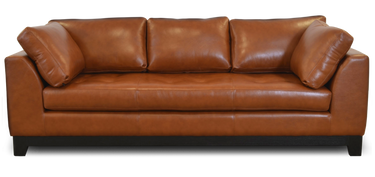
Tan, cognac, and caramel leather work beautifully with warm metals, natural oak, ceramic bases, and textured linen shades. These pairings keep the palette relaxed and layered. They suit homes that lean casual, rustic, or transitional.
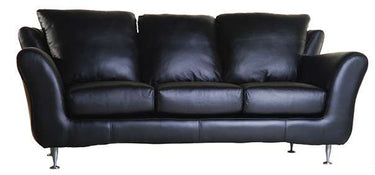
Black leather handles contrast well; matte black, antique brass, smoked glass, or a deep jewel-toned lamp base will fit. Cream, ivory, and light gray leather benefit from warm fixtures. Brushed gold and honey wood will prevent pale upholstery from a stark appearance.
Devise a Stunning Lighting Design
Treat leather furniture like a separate object won’t form a cohesive design. The best lighting plan ties the upholstery into the room through warmth, scale, and placement.
If you’re shopping for leather furniture in Dallas, visit The Leather Sofa Co. We offer custom pieces, so you can personalize every element of your room. Contact our team to find the perfect leather sofa!